The Disciplined Kitchen
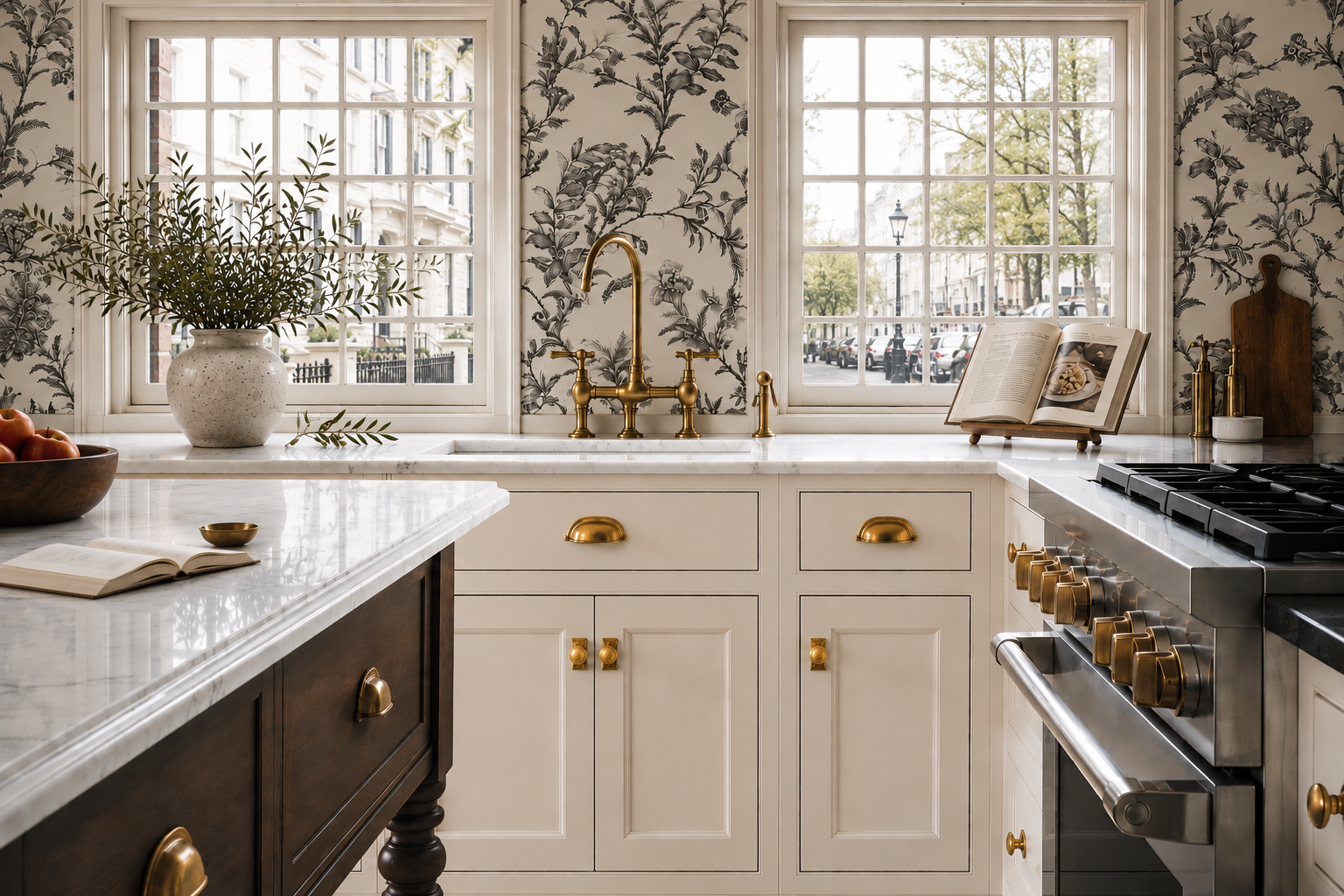
A kitchen is not assembled the way someone assembles a piece of machinery, fitting parts to parts until the thing runs. It is resolved. That is the only word for it. The way an argument is resolved, or a season, or a grief — when everything that needed to happen has happened and what remains is only the thing itself, standing quietly, asking nothing more of you.
This takes discipline. And discipline is not a glamorous thing. It does not photograph well. It does not announce itself in the doorway. It is simply the evidence of a person who knew what they wanted and refused, patiently and without drama, to want anything else.
People who understand proportion do not talk about it much.
They have learned it the hard way, which is the only way it is actually learned — by getting it wrong and living with the wrongness until the eye finally understands what the mind could not teach it. Cabinet heights that are off by two inches. A drawer division that lands in the wrong place and cannot be explained, but cannot be ignored. A panel width that is almost right, which is the same as being wrong.
When proportion is correct, a person does not see it. That is the nature of the thing. They walk into the room, and they feel settled without knowing why. The simplest cabinetry, painted a plain color, hung at the right height with the right depth and the right reveal, can make a person feel that they have come somewhere worth coming to.
No carving fixes bad proportion. No hardware. No stone. You cannot decorate your way out of a structural lie.
There is a kind of person who believes that more is always better. More materials, more surfaces, more variety, more contrast. They put four kinds of stone in the same room and call it layered. They introduce metal and wood and glass and concrete, and then stand back confused, wondering why nothing holds together, why the room feels like an argument nobody is winning.
A kitchen that is trying to do too many things is a kitchen that does not know what it is.
The kitchens that last are edited. One primary surface carrying its weight. One material beneath it, supporting without competing. Perhaps one thing more — a metal, a wood, something that answers the other two and then goes quiet. That is all. The rest is restraint, which is not poverty. Restraint is what a man exercises when he knows the difference between what he wants and what the room needs.
Natural materials belong here because they do not stay the same. Stone veins differently from one slab to the next. Wood moves with the seasons, taking in moisture, releasing it, shifting imperceptibly in the frames. Brass darkens at the touch. These materials carry time inside them, and a kitchen should carry time. It should not arrive perfect and stay perfect, like something preserved under glass. It should live.
Light is misunderstood almost everywhere.
People think of light as something to maximize, to flood a room with, to eliminate shadow from every corner as though shadow were a failure. But a room without shadow is a room without depth, and a room without depth is a room that does not hold you.
The old kitchens knew this. The windows were placed to catch the morning and let the afternoon come in sideways. The surfaces were chosen for what they did to light as much as for what they looked like — matte finishes drinking the light in, pulling it down into themselves; polished surfaces throwing it back across the room to land somewhere unexpected.
The artificial lights should be laid in the same way a man layers firewood — the largest pieces providing the foundation, the smaller pieces filling the gaps, nothing wasted, nothing excessive. Bright where the hands work. Warm where the room breathes. Quiet everywhere else.
Not brightness. Clarity.
Those are not the same thing, and the difference matters enormously.
A kitchen that is hard to work in is not a good kitchen, regardless of what it looks like.
This seems obvious. It is apparently not obvious, because such kitchens are built constantly — beautiful rooms where the distance between the stove and the sink is unreasonable, where the storage makes a person bend and stretch and search, where the preparation space is generous in the drawings and insufficient in the living.
The body knows things the eye does not. The body knows how far is too far to carry a heavy pot. It knows the difference between storage you can reach without thinking and storage that requires a decision. It knows, at the end of a long day, the difference between a kitchen that receives you and one that requires effort before it will cooperate.
Workflow is not a technical problem. It is a human one. How a person moves through the space when they are tired, when they are distracted, when they are feeding children who are hungry and asking questions. Design for that person. Design for the worst of ordinary days, and the best days will take care of themselves.
Hardware is where many kitchens confess their insecurity.
Someone who is not certain the room is enough will reach for more — more texture in the pull, more visual interest in the hinge, more complexity in the edge profile. Each addition announces the same thing: I was not sure this was enough on its own. And the room agrees. The room is no longer enough on its own, because every surface now has something to say, and the noise accumulates until the whole space is exhausted.
The right hardware is what you stop noticing after the first day. The right edge profile is the one that simply closes the cabinet and asks nothing more. Consistency — in finish, in form, in the quiet repetition of a single clear decision made and held — creates the calm that more expensive, more elaborate, more expressive kitchens cannot achieve.
Calm is not boring. Calm is what you have when everything is resolved.
Trends come through a place like weather and leave like weather. A person wakes up one morning, and the thing that seemed right last year seems like someone else's idea. The kitchen built for the moment reveals its moment, and that moment passes, and what remains is a room that looks like a photograph of an era rather than a place where a family actually lives.
A kitchen designed for longevity is designed with a different question in mind. Not what is current? But what is correct? Correct proportion. Correct materials. Correct restraint. These things do not date themselves because they were never trying to belong to a particular year. They were trying to belong to the people inside them.
The marks of use should make such a kitchen better, not worse. The worn place on the floor near the stove. The darkened brass. The stone that has received its scratches and its rings and holds them without apology. These are not failures. These are the room becoming more completely itself.
Simplicity is not the absence of thought. It is the final result of a very great deal of it.
Someone who has worked out what a kitchen truly needs, and has had the courage to stop there — to resist the addition that would have satisfied his nervousness, to hold the line against the detail that would have announced his effort — that man has made something that will outlast him. The room will stand without explanation. It will receive people without ceremony. It will do its work quietly and endure.
This is what all the finest things do.
They do not seek attention.
They simply remain.