Presence Over Perfection
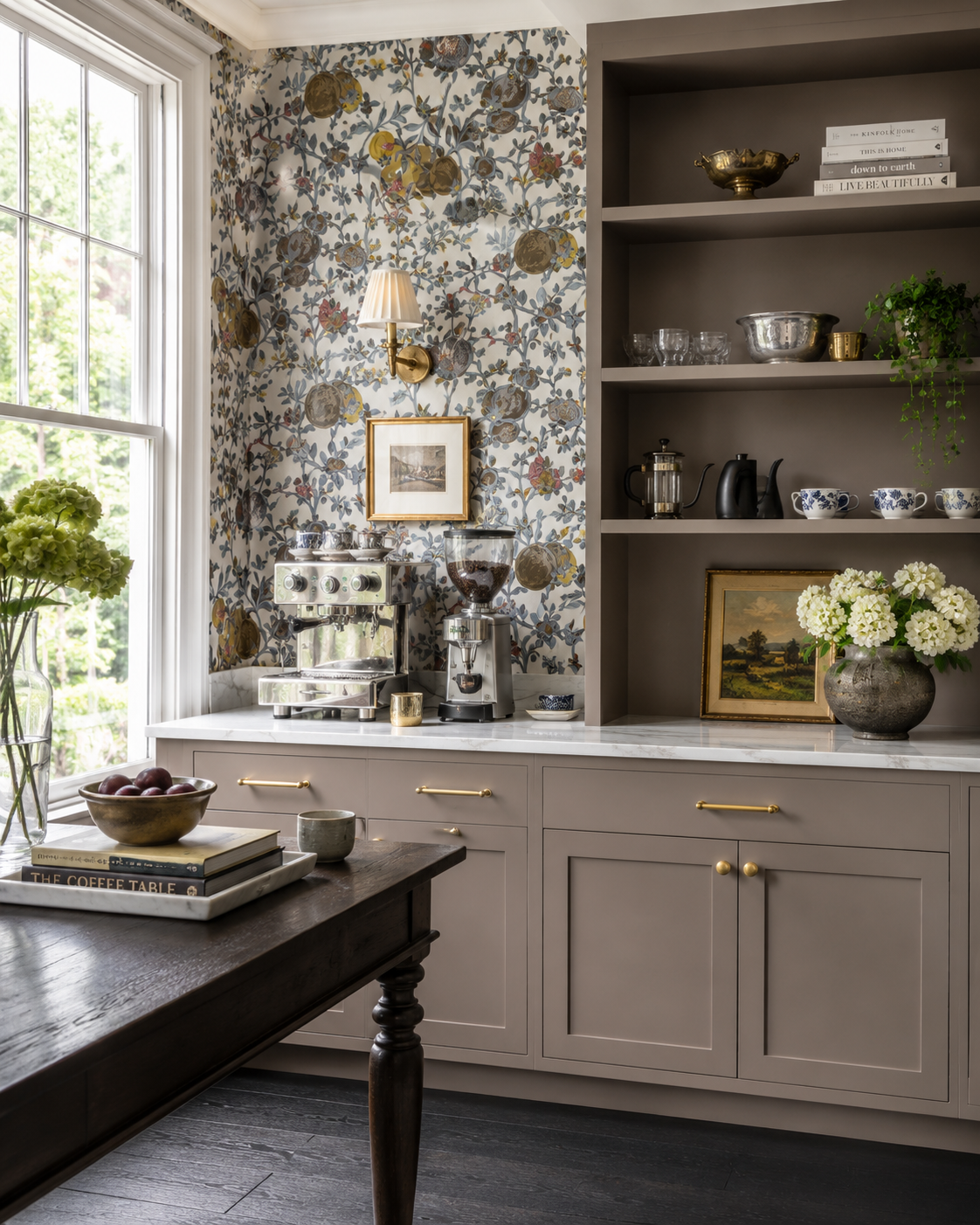
The great kitchens of London, New York, and Los Angeles do not reveal themselves immediately.
They unfold. Through atmosphere rather than spectacle, through proportion rather than scale, through the quiet authority that belongs only to houses shaped carefully over long periods of time. Stylistically, these rooms share almost nothing. A Belgravia kitchen bears no visual resemblance to a Tribeca penthouse or a hillside residence above Sunset Boulevard. And yet beneath their architectural differences, the most enduring of them share a set of instincts so consistent as to constitute something close to a philosophy.
They understand that domestic life carries emotional weight. And that the kitchen, more than any other room in the house, is where that weight accumulates most completely.
Luxury real estate photography has a tendency to reduce kitchens to inventories: marble islands, integrated appliances, statement pendants, imported hardware, custom millwork. But the rooms people carry with them years after first encountering them are remembered quite differently. One recalls light moving across plaster at dusk. The depth of shadow beneath a run of cabinetry. Rain against steel-framed windows. The particular warmth gathered around unlacquered brass on a grey afternoon. The quiet enclosure of a pantry passage. The way a room holds itself against the body.
Atmosphere arrives before finishes. It always does.
London has always understood this.
The finest London kitchens do not strive for visual perfection. They carry restraint instead — a quality the city itself seems to encourage. Rooms in Mayfair, Chelsea, Kensington, Holland Park, and Notting Hill possess a curious softness beneath their formality. Cabinetry sits within the architecture rather than competing with it. Colours are drawn from the city's own palette: soot and parchment, wet stone and tobacco, chalk and moss, smoke-softened greens, the particular oxblood of Georgian brickwork seen through a kitchen window on a November morning.
Light arrives differently in London than in brighter climates. Grey skies flatten sharp contrast and reward surfaces that reward looking at slowly: painted timber, limewashed walls, aged brass, honed marble, wallpapers faded to exactly the right degree, oak darkened gently over several decades. The architecture shapes the room before decoration is considered.
Many London houses were never conceived around the open-plan living that became fashionable in the latter half of the twentieth century, and the finest among them have never been persuaded to pretend otherwise. Georgian and Victorian proportions continue to govern domestic scale. Kitchens remain narrower than their American counterparts, their ceiling heights elegant, their footprints disciplined. Butler's pantries, breakfast rooms, utility passages, and secondary scullery spaces create depth through sequence — one moves through such a kitchen rather than confronting it in a single panoramic revelation.
This layering creates intimacy. And intimacy remains one of the most enduring luxuries the English interior knows how to produce.
The finest London kitchens never expose everything at once. Storage retreats behind painted cabinetry. Pantry shelving withdraws into cooler ancillary rooms. Glazed cupboards reveal only what has been chosen — ironstone, old crystal, silver, stacked linen. Utility remains present but softened, absorbed into atmosphere and domestic repetition rather than offered up for admiration.
The room settles around its rituals. Morning tea beside a cooler window. Raincoats drying near a utility entrance. The low glow of lamps against dark-painted walls during winter afternoons. A black Aga radiating residual warmth long after supper has ended. These are not aesthetic decisions. They are the accumulated evidence of a house that knows what it is.
New York approaches the question from an entirely different direction.
Where London accumulates warmth through layering and enclosure, New York achieves it through material confidence and architectural precision. The great kitchens of Manhattan — in pre-war apartments along the Upper East Side, in Tribeca lofts, in Greenwich Village townhouses and the converted industrial buildings of SoHo — carry an extraordinary understanding of proportion and an even more extraordinary understanding of tension.
Old against new. Steel against walnut. Industrial scale against domestic softness. European restraint against American ambition. New York kitchens thrive on the productive friction between these forces, and the finest of them edit with considerable rigour. Every line earns its place because the surrounding architecture already carries such force. In a pre-war apartment overlooking Central Park, cabinetry rises cleanly beneath deeply moulded ceilings restored from the 1920s. Honed marble absorbs winter light beside aged bronze. Refrigeration disappears quietly into panelled walls. Nothing shouts because nothing needs to.
Even in wholly contemporary Manhattan residences, the strongest kitchens avoid excessive gesture. Materials carry the emotional work: brushed oak, smoked walnut, Arabescato marble taken to a matte finish, aged nickel, hand-finished plaster, blackened steel, ribbed glass, unlacquered bronze left to find its own patina in its own time. The room feels composed rather than decorated.
New York also understands scarcity in a manner that London and Los Angeles, with their greater spatial generosity, occasionally do not. Space remains precious even at the highest levels of the market. This pressure produces remarkable efficiency. Walk-in pantries conceal immense storage behind modest openings. Banquettes carve intimacy from narrow corners. Millwork absorbs utility without trace. Every inch justifies itself architecturally — and yet New York kitchens are never apologetic about luxury. Bespoke cabinetry built to furniture-maker standards, slab marble rising uninterrupted to the ceiling, bronze hardware cast specifically for a single project. The room retains urban discipline while remaining entirely unembarrassed by its own ambition.
Los Angeles operates according to laws that neither London nor New York would recognise.
Light governs everything. The great kitchens of Bel Air, Brentwood, Beverly Hills, Montecito, Pacific Palisades, and the Hollywood Hills possess a relationship with openness that the other two cities cannot fully replicate. Architecture dissolves outward. Walls give way to gardens, terraces, courtyards, olive trees, and distant horizons washed in pale coastal light. The room expands beyond its own boundaries as a matter of course.
And yet the most sophisticated Los Angeles kitchens resist the considerable temptation toward emptiness that this openness invites. This is precisely where a great many contemporary California interiors lose their way. Endless white stone, oversized islands, overlit ceilings, and cavernous open plans produce rooms that read impressively in photographs and feel emotionally hollow in person. The strongest Los Angeles kitchens retain warmth through texture, shadow, and material softness — through plaster and oak and limestone and hand-finished surfaces capable of receiving California's extraordinary light without being overwhelmed by it.
That light exposes everything mercilessly. Highly polished surfaces can feel genuinely exhausting beneath it. The finest interiors therefore rely upon muted tonal palettes and materials that soften brightness rather than amplify it. Travertine worn matte beneath bare feet. Rift oak cabinetry bleached gently by years of sun exposure. Bronze darkening slowly beside salt air. Linen moving quietly at steel-framed doors left open through much of the year.
Los Angeles kitchens also possess a domestic rhythm entirely their own. Fruit bowls overflow because citrus grows beyond the terrace. Windows stay open through winter mornings. Breakfast dissolves into gardens scented with rosemary, jasmine, eucalyptus, and the particular dry warmth of earth after prolonged heat. Utility expands outward into courtyards, covered loggias, and outdoor kitchens that operate as genuine extensions of the interior rather than seasonal additions to it.
The room breathes differently. And this too is a form of luxury.
Despite everything that separates them, the finest kitchens across all three cities ultimately pursue the same end.
Permanence against the instability of trend. Material honesty over spectacle. Shadow trusted rather than eliminated. Utility softened rather than concealed entirely. Life allowed to accumulate against surfaces chosen specifically because they are capable of receiving it.
A great kitchen earns its authority slowly. Through use and weather, through habit repeated thousands of times against the same surfaces, through the gradual accretion of objects not purchased all at once and light fittings lit progressively earlier as the evenings shorten. Brass darkens. Timber softens. Marble dulls faintly beneath water and citrus. The room becomes less a designed space than a domestic landscape shaped over years around the particular rhythms of a particular life.
This is the quality the finest houses in London, New York, and Los Angeles continue to pursue — not through novelty, not through spectacle, not through the relentless accumulation of expensive surfaces.
Through presence.
And presence, as any well-made room will eventually demonstrate, cannot be installed. It can only be inhabited.