On Color and Quiet Authority
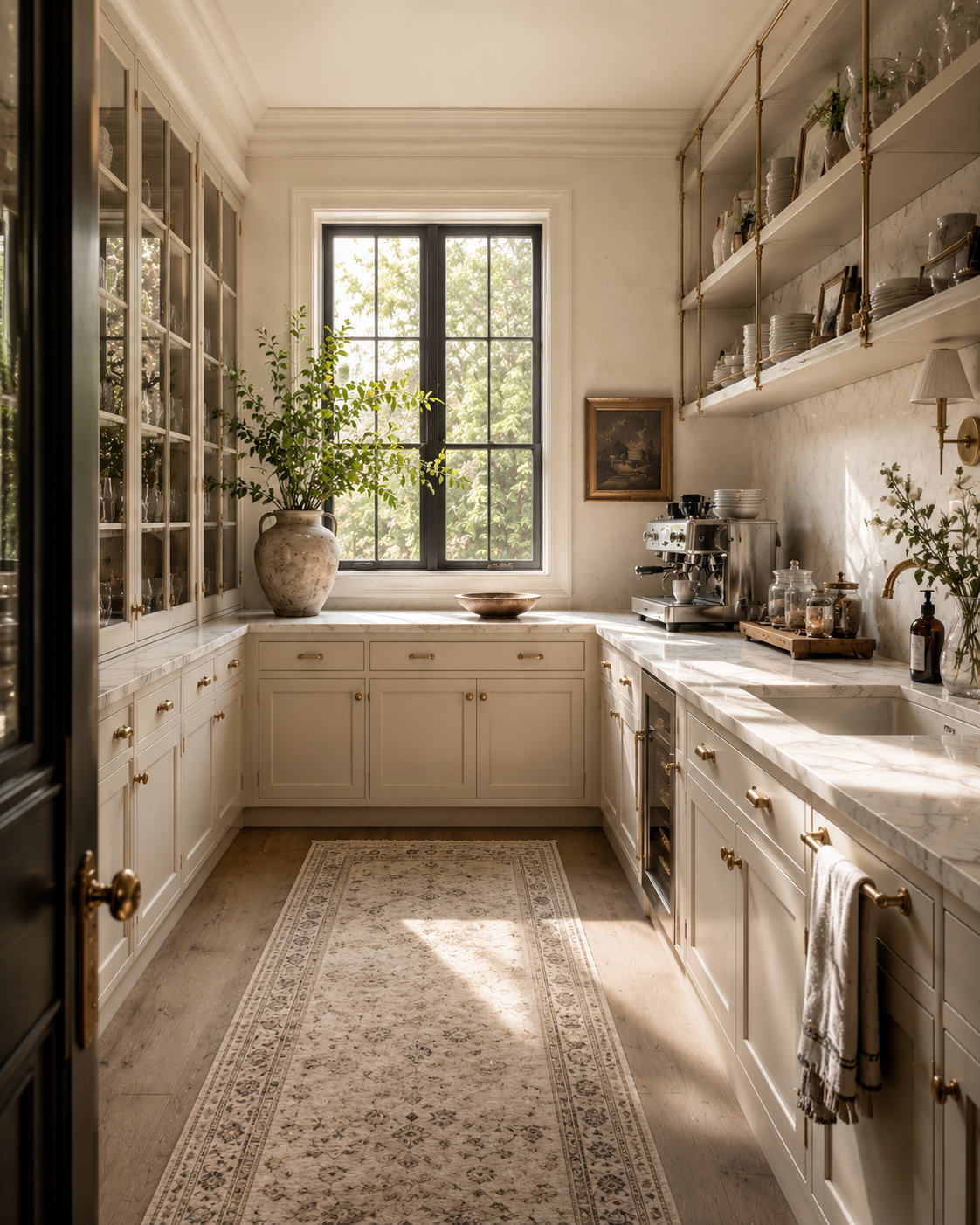
There is a thing that happens in a kitchen that has been lived in for a long time. The colors settle. They stop being colors a person chose from a card at the paint shop and they become simply the color of the room, the way a man's face becomes simply his face after enough years, unremarkable and irreplaceable at once.
A kitchen does not need to be expensive. But it needs to be honest.
The people who build kitchens that last do not follow what is fashionable in the cities. They have learned — slowly, the way most true things are learned — that a color chosen for the season will betray you by the following year. It will begin to look like what it was: a guess. An attempt to be current. And there is nothing in a home that ages worse than the evidence of a man trying to keep up.
The colors that endure are not exciting colors. They do not make a person stop in the doorway and say something. They are the colors of things that were already old when your grandmother was young. The color of good cream. Of river stone worn flat by water. Of charcoal in a cold hearth. Of soil that has been turned and turned again until it has forgotten what it was before the plowing.
These colors do not arrive in a room. They seem always to have been there.
There are people who will tell you that white is the only honest color for a kitchen. They are not entirely wrong, but they are not entirely right either. There is white and then there is white.
The white that is too sharp, too certain of itself — that white has no memory. It reflects everything and holds nothing. A bowl of peaches left on a counter in that light looks almost surgical, like evidence. But an off-white, a cream, a white that has considered warmth before committing to itself — that white is different. The light moves in it differently. Morning in such a kitchen is softer than it has any right to be.
And then there are the deeper colors.
Charcoal. Black, if someone has the nerve for it and the patience to do it right — not the hard black of a chalkboard or a wet road, but the black of old iron or deep water or the sky an hour before it decides to snow. These are colors that do not compete with anything. They simply establish the terms. The marble beside them becomes more itself. The brass above them gathers warmth it would not otherwise own. Surfaces that seemed ordinary become deliberate.
A color like that does not fill a room. It anchors it.
The people who understood this best were not designers. They were people who lived in the same house for forty years and paid attention. They knew that a deep green, drained of its brightness until it was nearly the color of shadow on grass, could make a small room feel as though the land had come inside and laid itself down quietly. They knew that certain browns, certain taupes and stones and warms, could sit beside almost any material without argument, without insisting on attention.
These were not fashionable people. Fashion is what a person reaches for when they do not yet know what they want.
Undertones are what the eye feels but cannot name.
Every color carries something beneath it, a warmth or a coolness or a quality that is neither, and when the undertones in a room do not agree with one another, when the cabinet says one thing and the wall says another and the counter says a third, a person standing in that kitchen will feel uneasy without knowing why. They will say the kitchen feels off. They will suggest more light. They will rearrange things. But the argument will continue because you cannot solve with furniture what is wrong with the foundation.
When the undertones agree, though — when the warm brass answers the warm cream of the paint and both of them defer to the gold in the stone — a person does not notice. That is the point. When it is right, it disappears. What remains is only the sensation of a room that knows itself.
A kitchen is not a room for impressing people.
Or it should not be. A kitchen is where the bread is made and where the children sit after school and where someone stands alone at ten o'clock at night, eating something cold from a pot because the day did not leave room for a proper meal. It is where the dog waits near the door on winter mornings. Where the coffee is made before the talking starts.
A kitchen that has been given the right color and left alone to live in it will mark time differently than other rooms. The handles will darken first. The floor will soften in the places where the feet go most. The paint will hold all of this without complaint, deepening slightly in the places it has been touched the most, growing into itself the way people do.
This is what a lasting color does. It does not stay the same. It accompanies.
Restraint is not timidity.